
Late Night Mix
Role:
UX Designer, UI Designer, UX Researcher
Tools:
Figma, Google Docs, Google Spreadsheet
Methods:
Low Fidelity Prototyping, High Fidelity Prototyping, Usability Testing, Usability Heuristic, System Usability Scale (SUS) Assessments, UI/UX Design, UX Research
Timeline:
6 Weeks
April 2026 - May 2026
Course:
Advanced UX Design
Overview and Context
In an advanced UX course, I worked on a cross-functional project with User Experience (UX) and Simulation & Game Design (SGD) students to simulate a real-world game development environment. While SGD focused on development and assets, I led UI design, prototyping, and usability efforts.
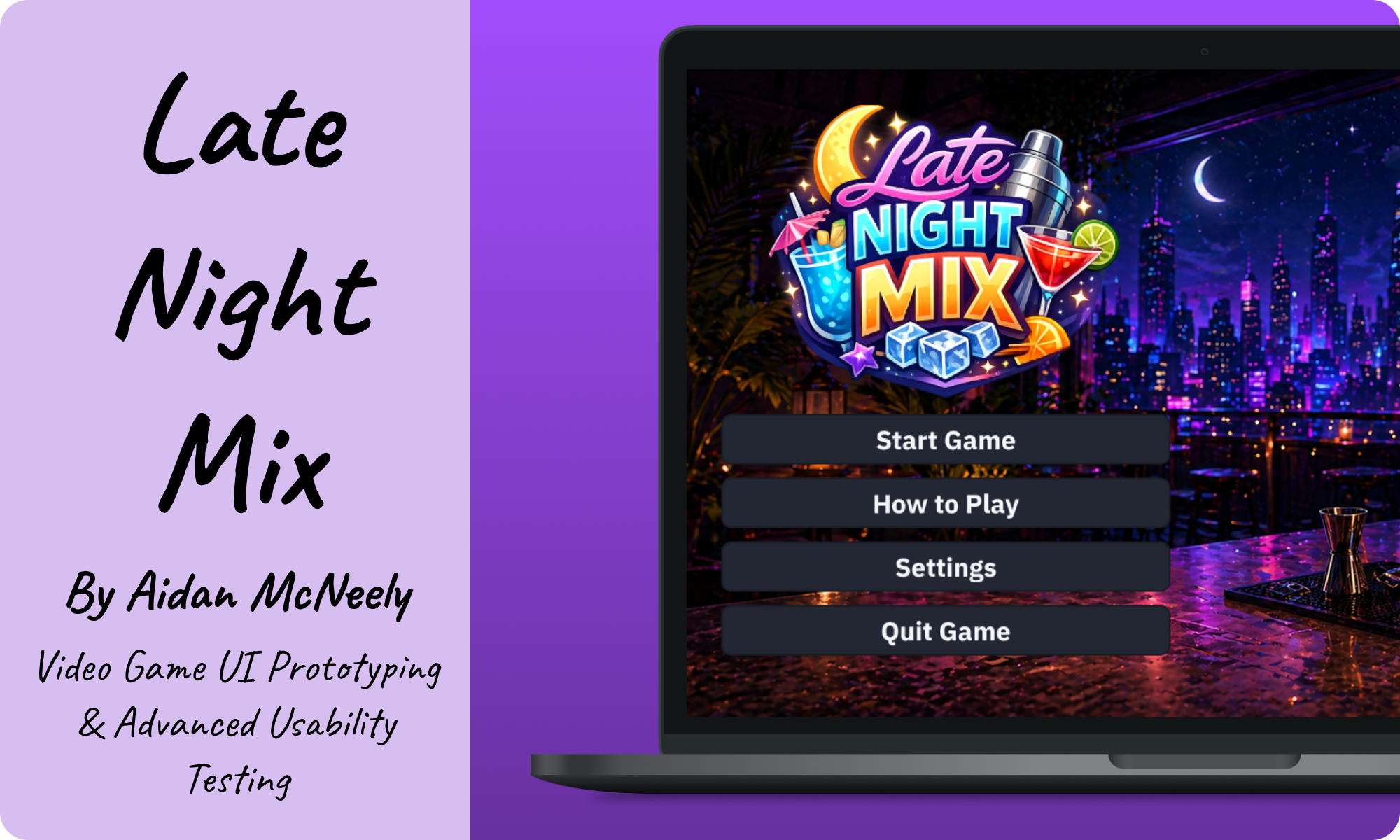
Our project, Late Night Mix, is a mixology game inspired by classic time-management titles like Papa’s Burgeria and Papa’s Pizzeria, where players prepare drink orders in a fast-paced nighttime setting.
I collaborated closely with developers to turn gameplay ideas into intuitive designs, contributing UI systems, high-fidelity prototypes, usability testing, system usability scale (SUS) assessments, and overall information architecture and visual hierarchy.
Although the final video game was unfinished due to time constraints on the SGD side, our UX team delivered a fully developed, usability-tested prototype that established a strong foundation for future development. This project highlights my ability to work cross-functionally and apply UX principles in a game development setting.
Click here to view the final Figma Design file
Game Selection and Scoping
At the start of the project, I collaborated with SGD teammates to define the core concept and direction of the game. They provided an initial elevator pitch, gameplay summary, mechanics, drink systems, UI needs, constraints, and early sketches.
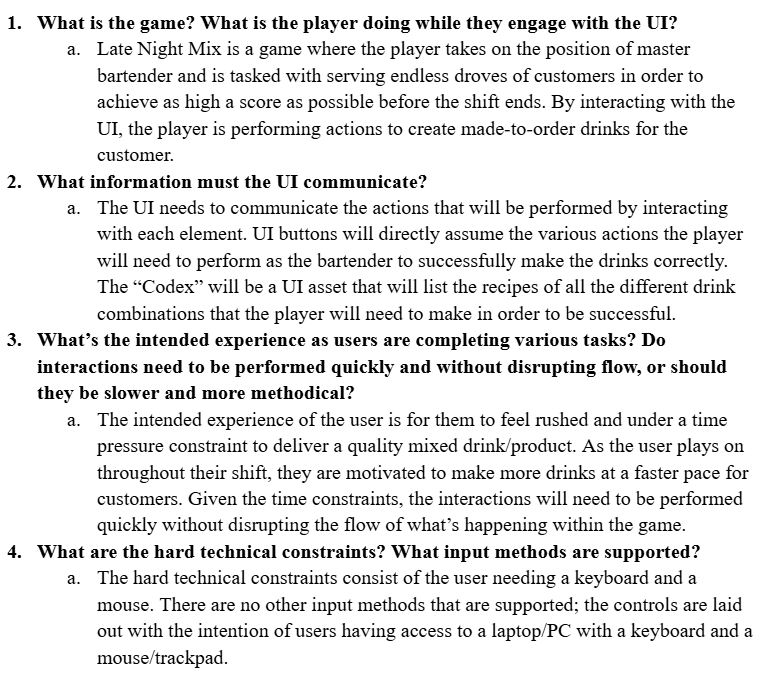
As UX designers, my co-designer and I guided this process by asking four key questions to align gameplay with user experience:
The four questions were:
What is the game? What is the player doing while they engage with the UI?
What information must the UI communicate?
What’s the intended experience as users are completing various tasks? Do interactions need to be performed quickly and without disrupting flow, or should they be slower and more methodical?
What are the hard technical constraints? What input methods are supported?
These discussions helped translate early concepts into clear UX requirements, ensuring the game's foundation was both engaging and usable from the start.
Debriefing Document Screenshot
Low Fidelity Prototyping & Heuristic Evaluation (click to view Figma file)
Using insights from our initial discussions, we translated SGD concepts into low-fidelity wireframes in Figma to define core functionality and user flows.
We also began establishing our design system within Figma, including components, color palettes, typography, and iconography to maintain consistency as the project evolved. Throughout this phase, we collaborated closely with the SGD team to ensure alignment with their vision.
We then created interactive prototypes in Figma and conducted heuristic evaluations to identify usability issues early and we revised/documented those issues before moving in to higher fidelity prototyping.
High Fidelity Prototyping, Usability Testing, & System Usability Scale (SUS) Assessments (click to view Figma file) (click to view Google Sheet)
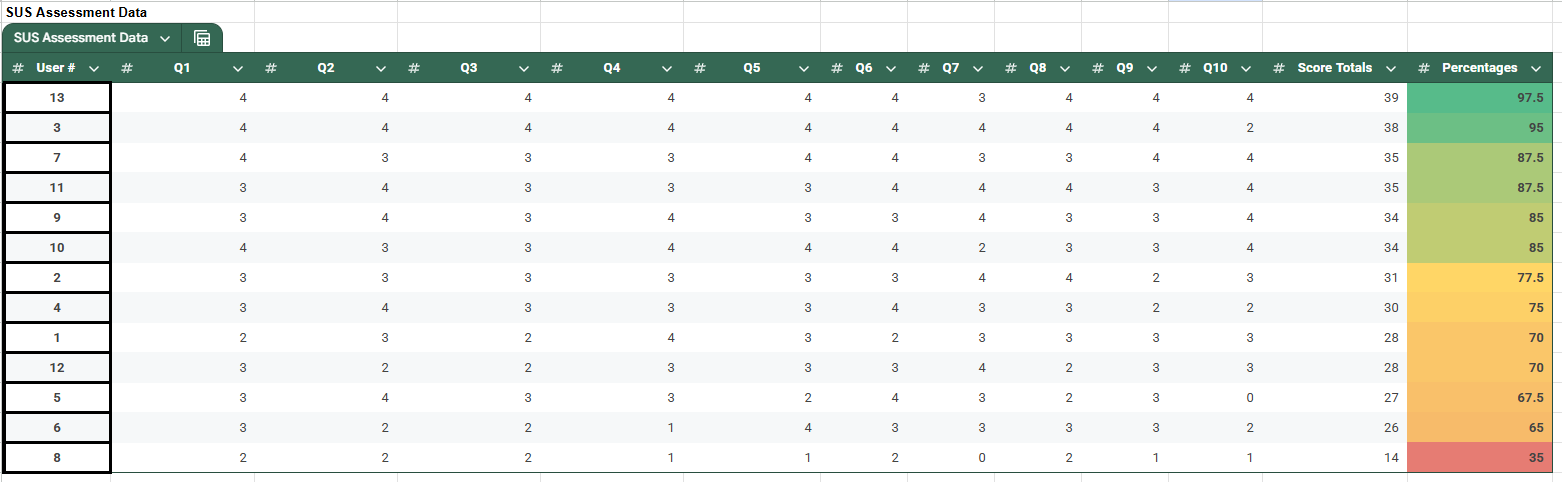
After addressing issues identified during low-fidelity prototyping, we progressed to high-fidelity prototyping. We created an interactive, user-friendly game UI suitable for usability testing and defined five tasks for participants to complete.
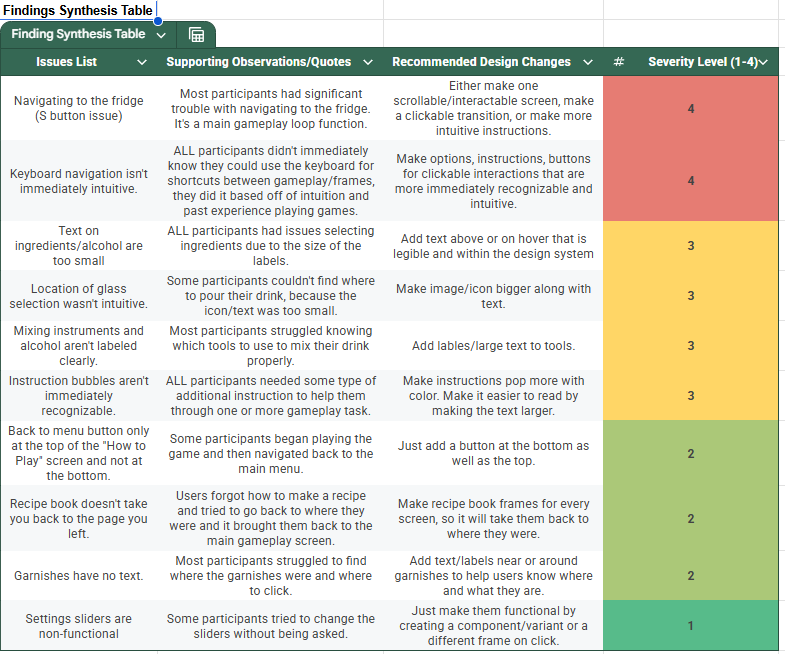
Thirteen students completed the test and then filled out the System Usability Scale (SUS) via Google Forms. Observations and SUS scores were recorded in a Google Sheet. We synthesized the results by listing identified issues and prioritizing them according to their frequency.